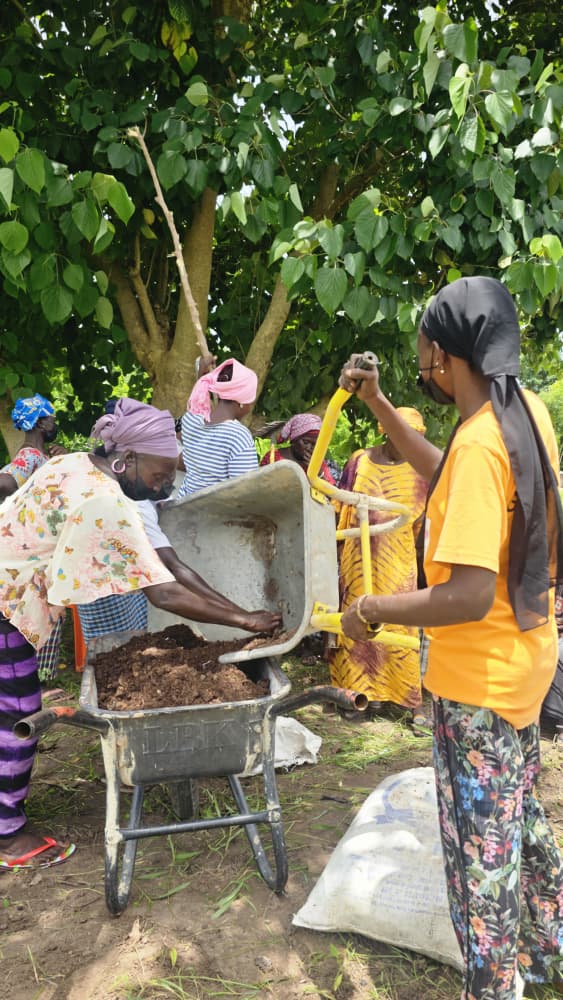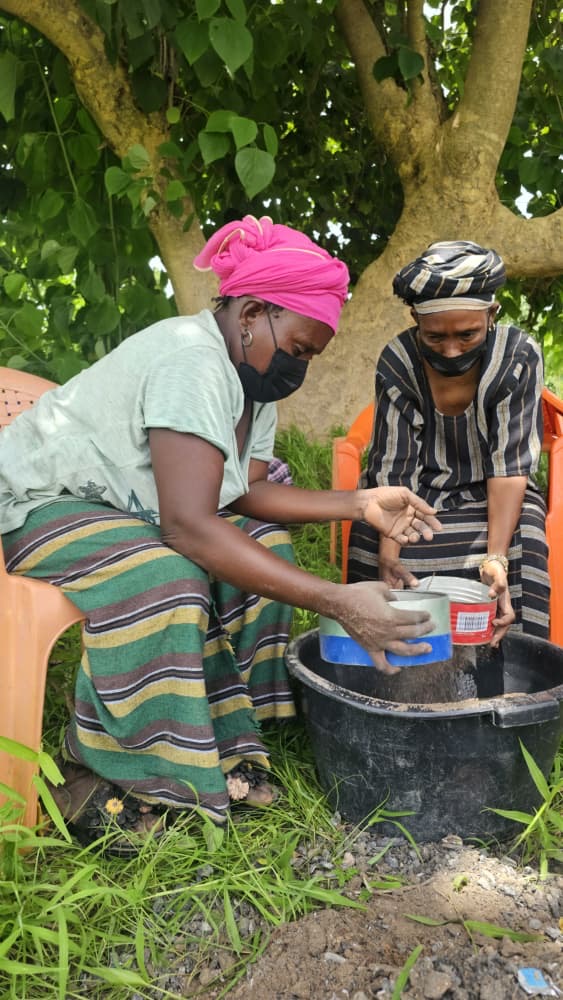
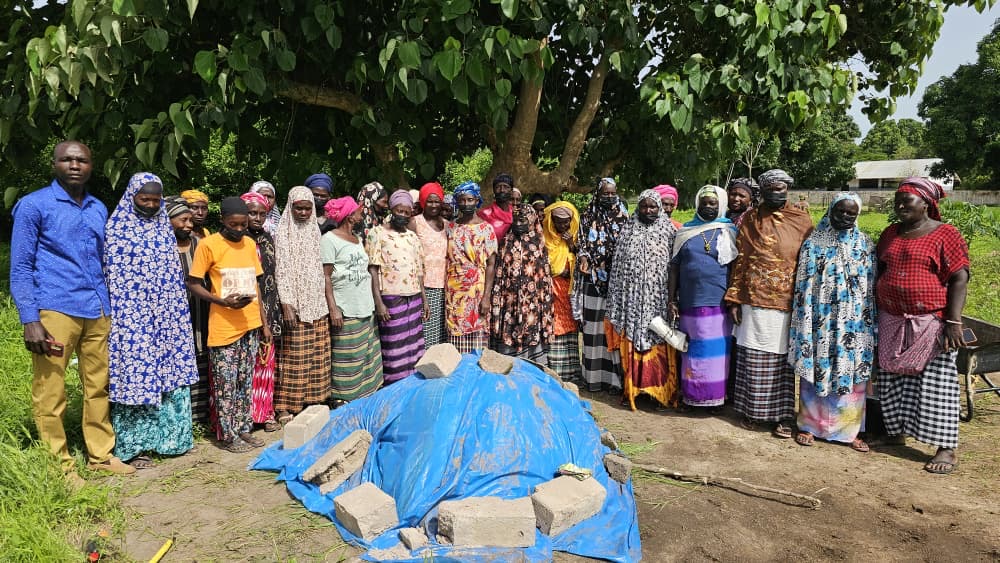
As part of the ecological farming training organised in Jiffarong, local farmers had the opportunity to learn about composting and prepare compost together. The training was supported by a grant from Symbioosi ry.
The training was led by FFHC agriculture extension worker Lamin Nyabally, his assistant Olie Gaye, and FFHC Project Manager Abdou Karim Badjie.
Composting is a simple yet useful way to make use of locally available organic materials. When different materials decompose under suitable conditions, they form nutrient-rich compost that can be used in farming to improve soil and provide nutrients for crops.
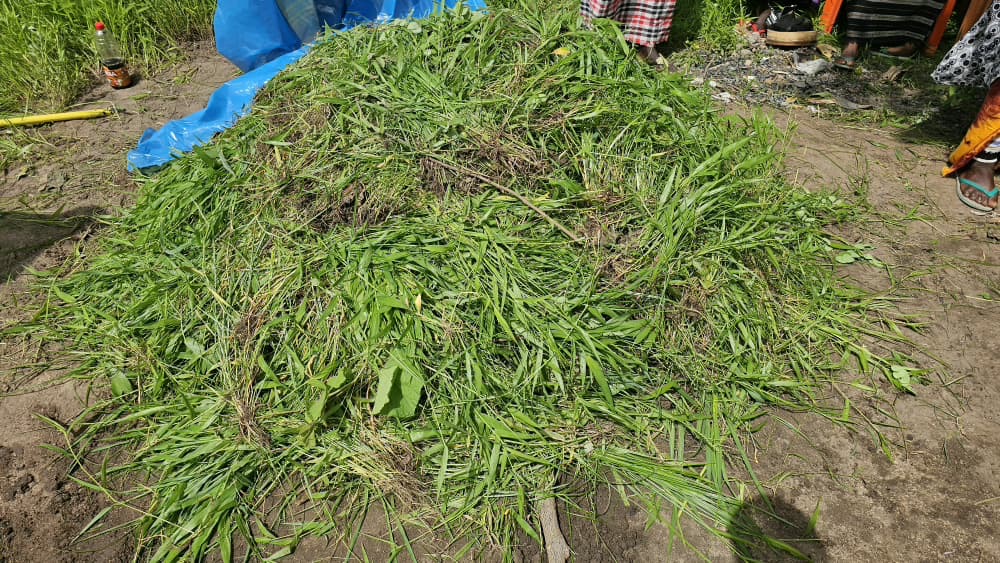
The compost-making process began by collecting locally available materials. The practical exercise made use of:
- cow dung
- poultry manure
- rice bran
- topsoil
- wood ash
- neem powder
- water
Different materials contribute different nutrients and properties to the compost. During the training, participants also learned about the importance of nutrients such as nitrogen, carbon, potassium, calcium, phosphorus, iron and magnesium for healthy plant growth.
Once the materials had been collected, the compost heap was built in layers. The materials were arranged so that softer and harder materials were placed one after another. This helps create suitable conditions for the organic matter to decompose and the compost to mature.
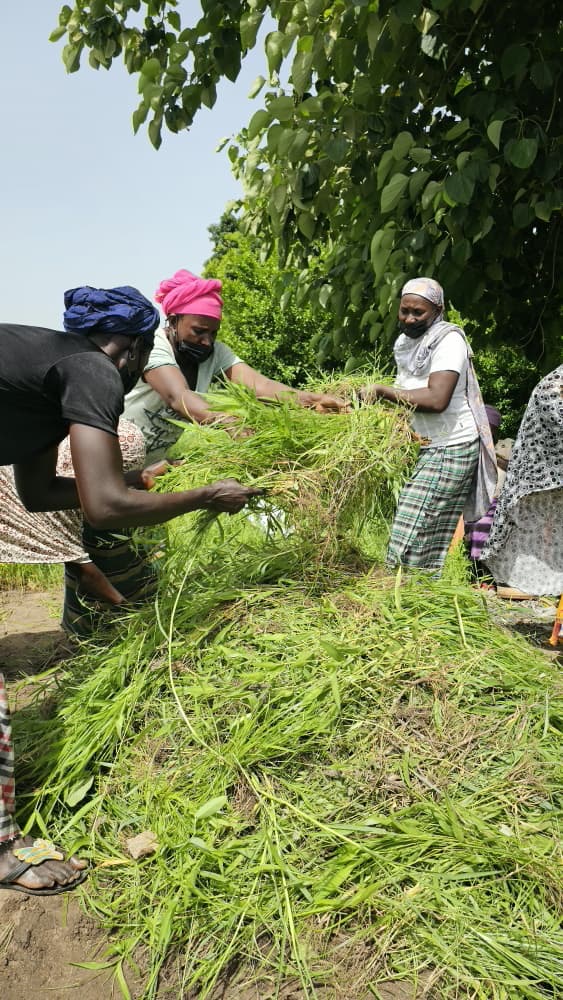
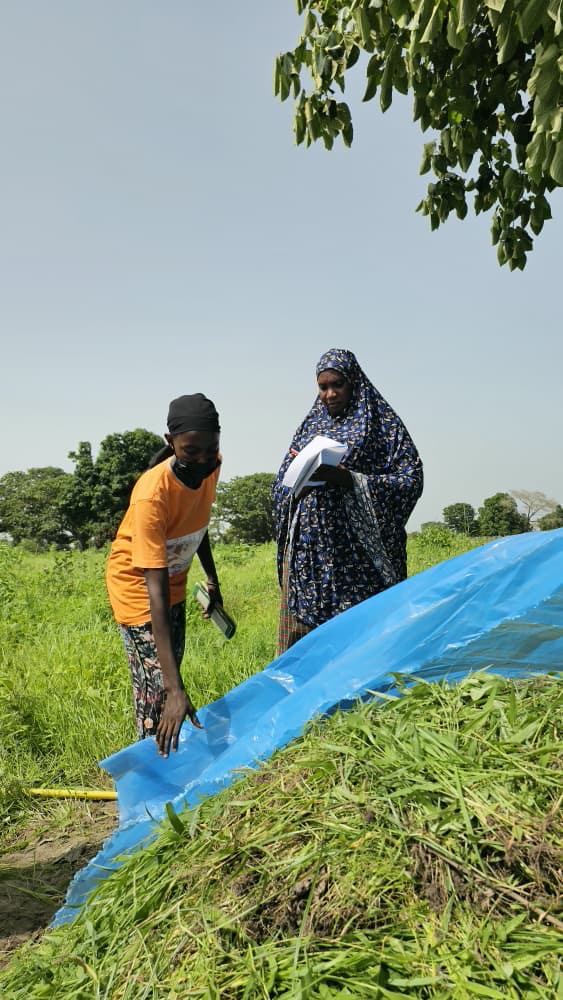
After the heap was built, it was watered to maintain an appropriate level of moisture. Keeping the compost sufficiently moist is particularly important during the dry season, as moisture supports the decomposition process.
Composting does not end once the heap has been built. During the training, the compost was monitored daily. The heap was turned regularly to improve air circulation and help the decomposition process progress evenly. Moisture levels were also monitored, and the heap was watered when necessary.
Three sticks were placed on top of the compost heap to help monitor the process and its progress towards maturity. By observing the sticks and the heap, the participants could follow the development of the compost and assess when it was approaching readiness.
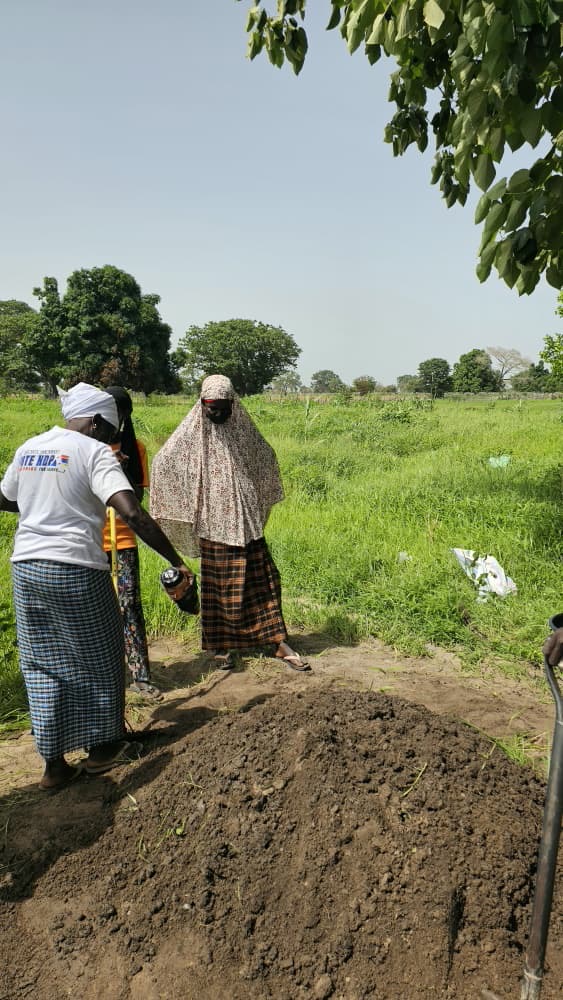
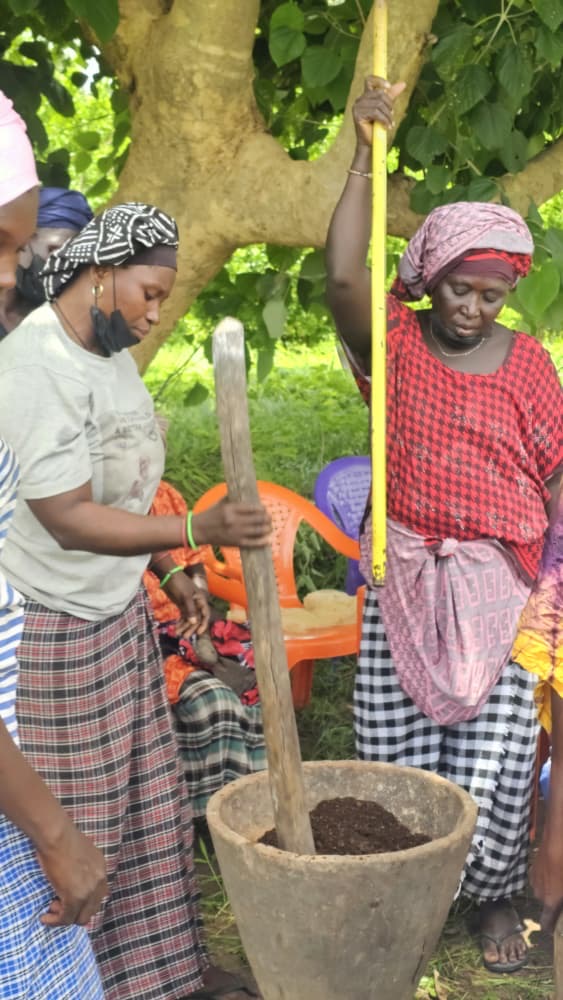
Compost takes time to mature. The length of the process depends, among other things, on the amount and type of soft and hard materials used, as well as the surrounding conditions. The compost may take up to around three months, or less, to mature.
Once the compost is mature, the plastic cover and the sticks on top of the heap are removed, and the finished compost can be collected for use. It can be applied, for example, to garden beds to improve soil structure and increase the availability of nutrients.
One of the important benefits of composting is its simplicity. Instead of allowing organic materials to go to waste, they can be put to use to support local farming.
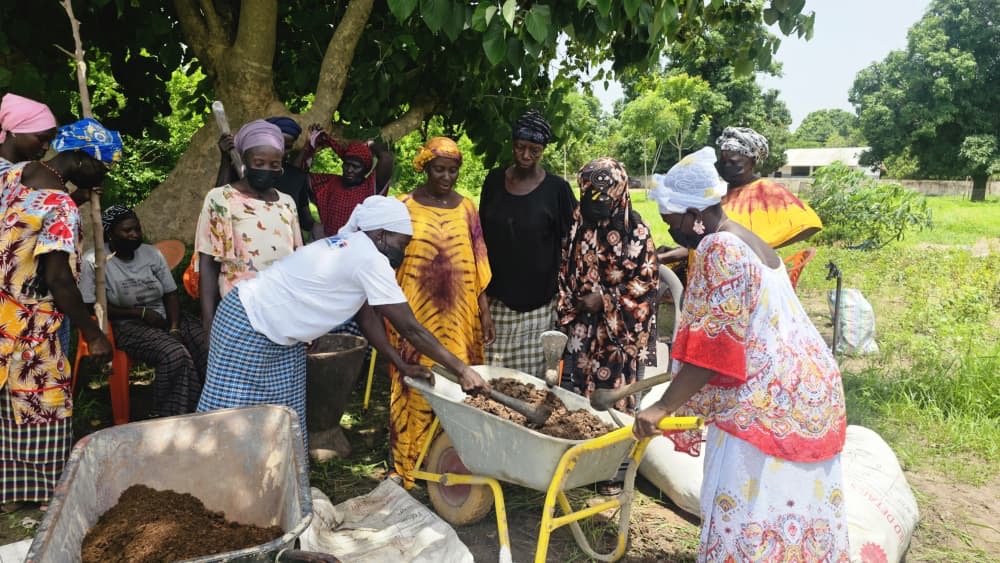
In Jiffarong, the aim of the training was above all to provide farmers with practical knowledge and skills that they can apply in their own farming. Making compost together provided a hands-on opportunity to learn how locally available materials can be turned into a natural soil amendment suitable for ecological farming. These practical skills can contribute to healthier soils and more sustainable food production over the long term.