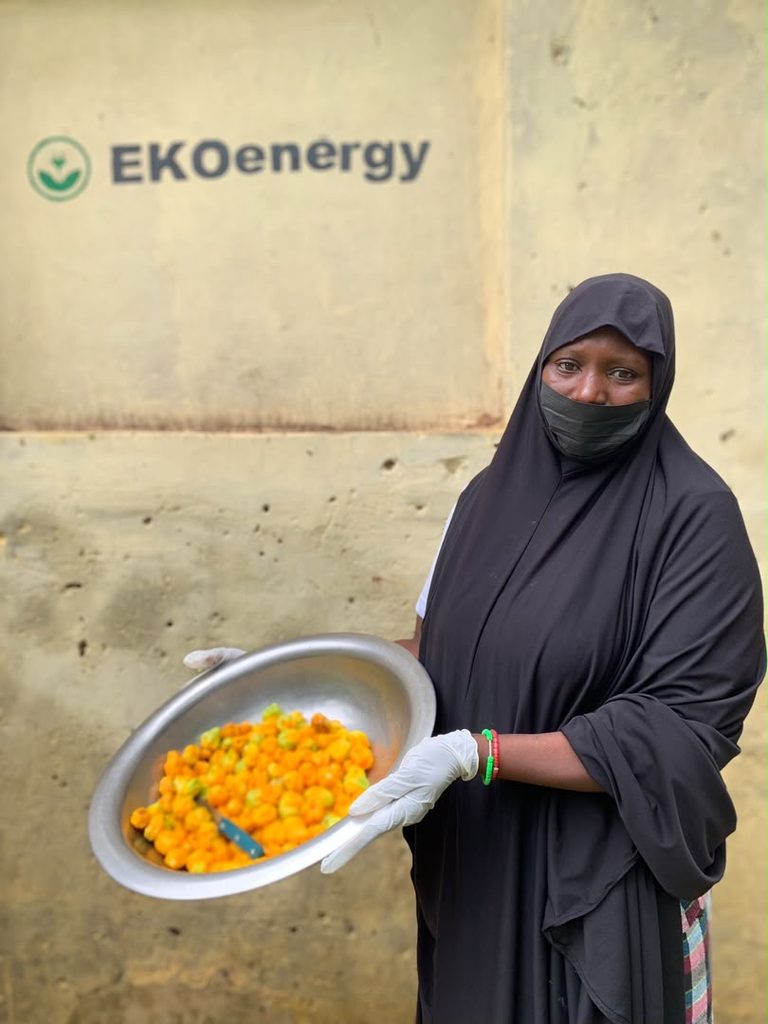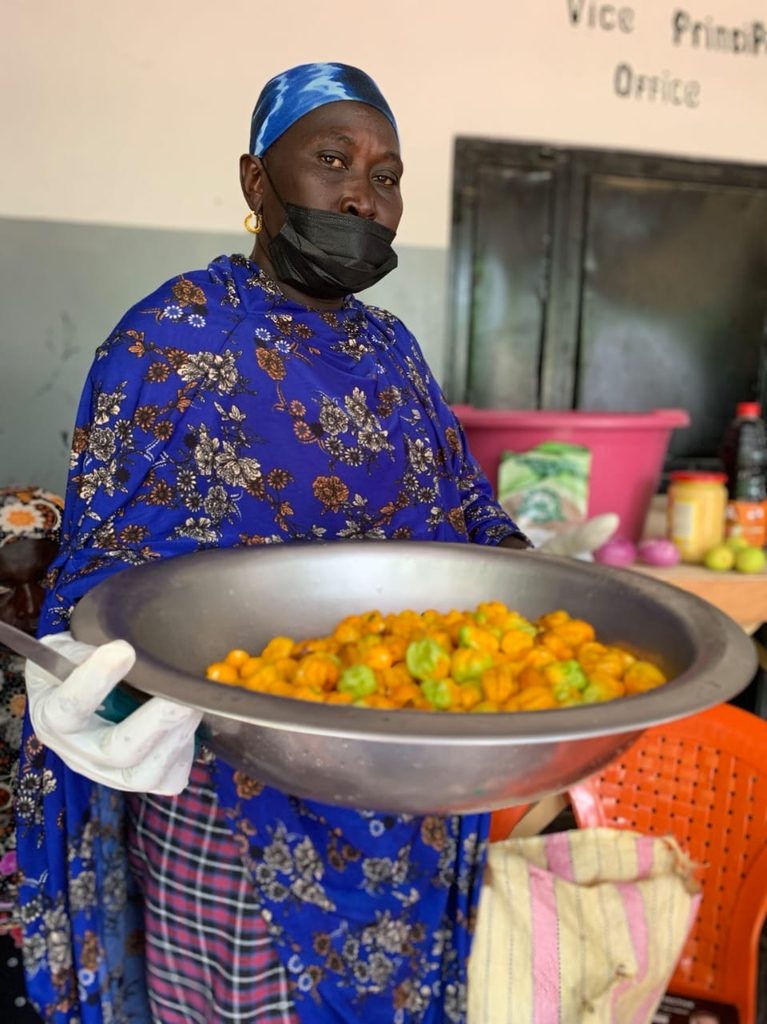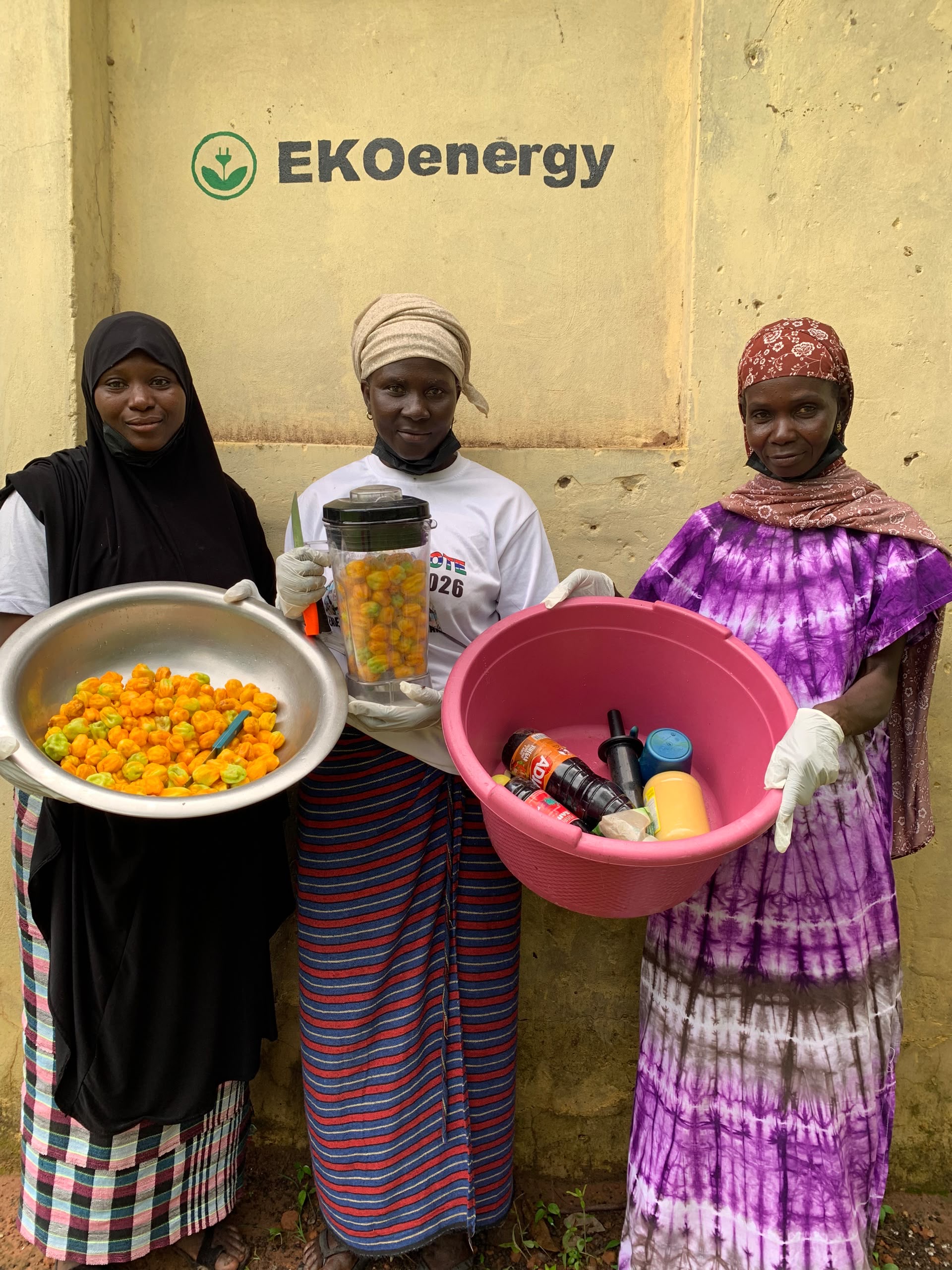
In August, local women farmers in Jiffarong took part in a second food processing training. This time it was requested by the farmers themselves, as a reminder of certain processing techniques they were particularly interested in. They wanted to refresh how to make pepper sauce and dukula, a traditional Gambian nutritious grain mix, similar to porridge, often eaten for breakfast and given to babies. The result: fresh peppers turned into delicious jars of sauce.
Jiffarong is a remote village with no public transport and barely any private vehicles, which makes getting to regional markets challenging for local farmers. Perishable vegetables like tomatoes, peppers and okra spoil quickly, so many farmers opt to grow mostly onions, which store better. Unfortunately, this limits crop diversity and makes it harder to sell within the community, since everyone has the same vegetable in abundance. This is why it’s extremely important to offer training on this topic, especially in the rural communities.
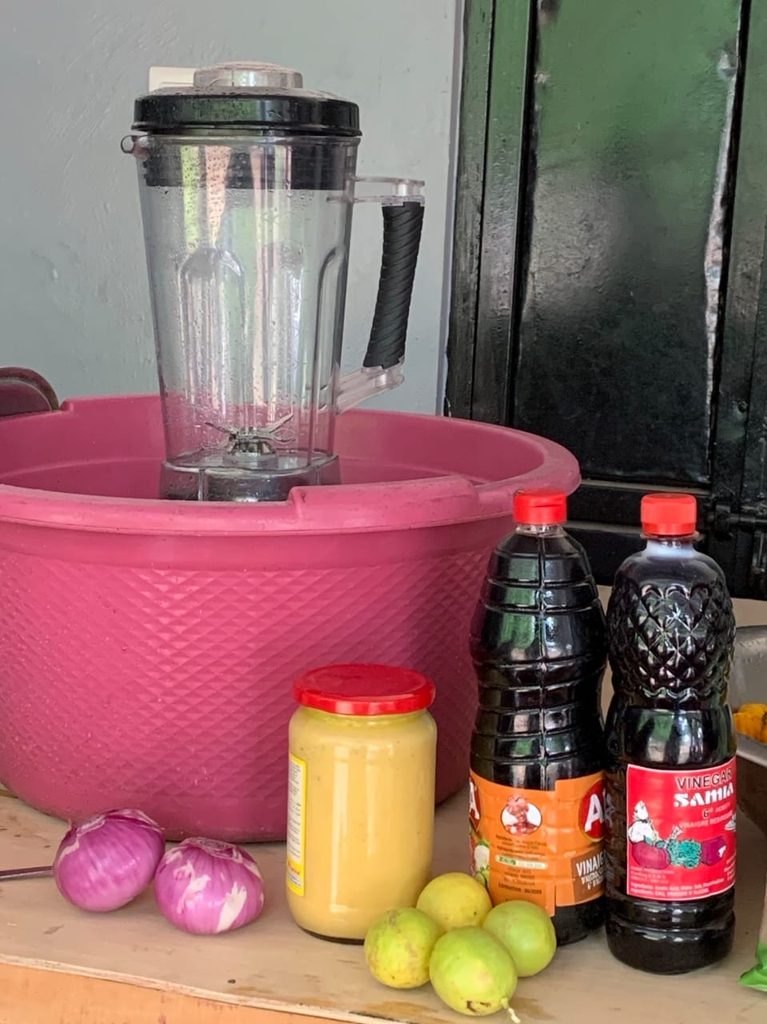
The training was led by agricultural trainer Lamin Nyabally and his assistant Olie Gaye, together with FFHC’s Project Manager Abdou Karim Badjie. The women themselves asked to revisit especially pepper sauce and dukula, which shows that the skills they learnt are valued and useful. For the sauce, the group worked with fresh peppers, onions and vinegar, using simple equipment such as a blender, a basin and a cooking pot.
Making pepper sauce takes three steps: preparation, blending, and finally mixing and cooking. In the preparation stage, fresh peppers are sorted by freshness and condition, which calls for careful attention to hygiene and excellent teamwork. Next, the sorted peppers are blended into a pepper base using a simple blender. Then comes mixing and cooking, where the base is combined with onions, vinegar and the other ingredients to get the right consistency. The women did every step themselves: they saw, touched and did, rather than just watched.
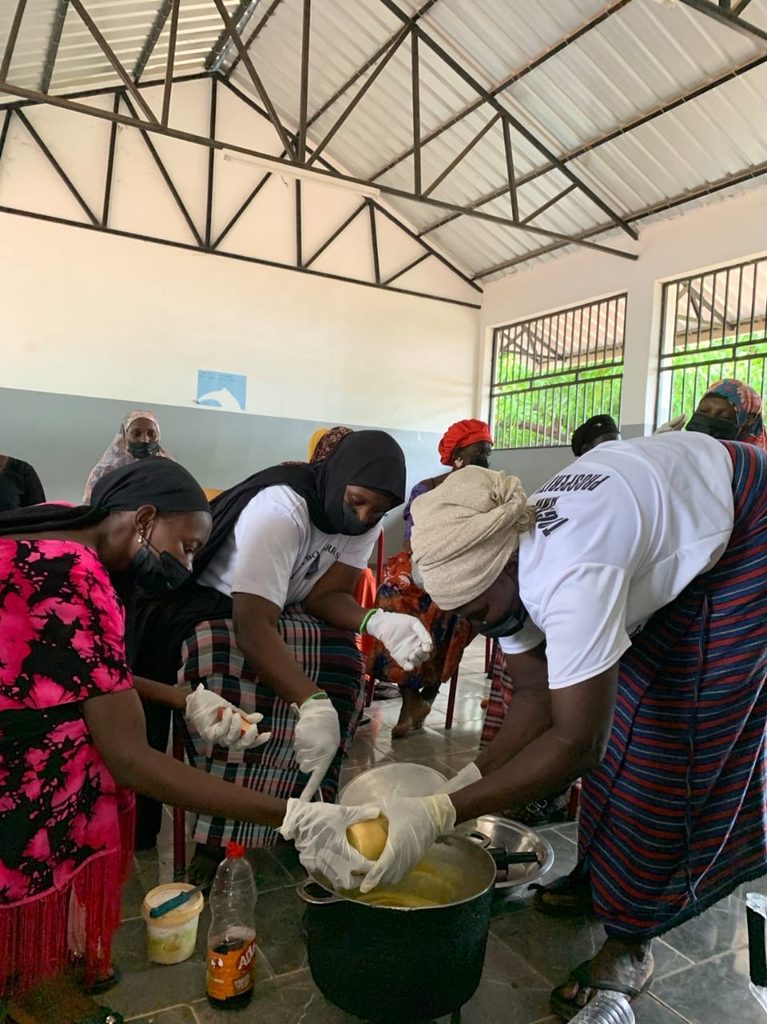
The finished sauce is packed in jars, ready for storage and household use or sale. Processed products last longer and sell for more, and less of the harvest is lost after picking, which is especially important for quickly spoiling vegetables. In the long run, this could open up opportunities for small-scale local enterprises and boost local entrepreneurship. Soon women will be able to sell these products also at the EKOenergy funded Dumbuto solar kiosk, that will be completed by the end of the year.
The training also covered compost-making in the garden, where farmers learnt to turn and layer organic materials to improve soil fertility and moisture retention, and to reduce reliance on chemical fertilizers. Healthier soil means better harvests, and more vegetables to process!
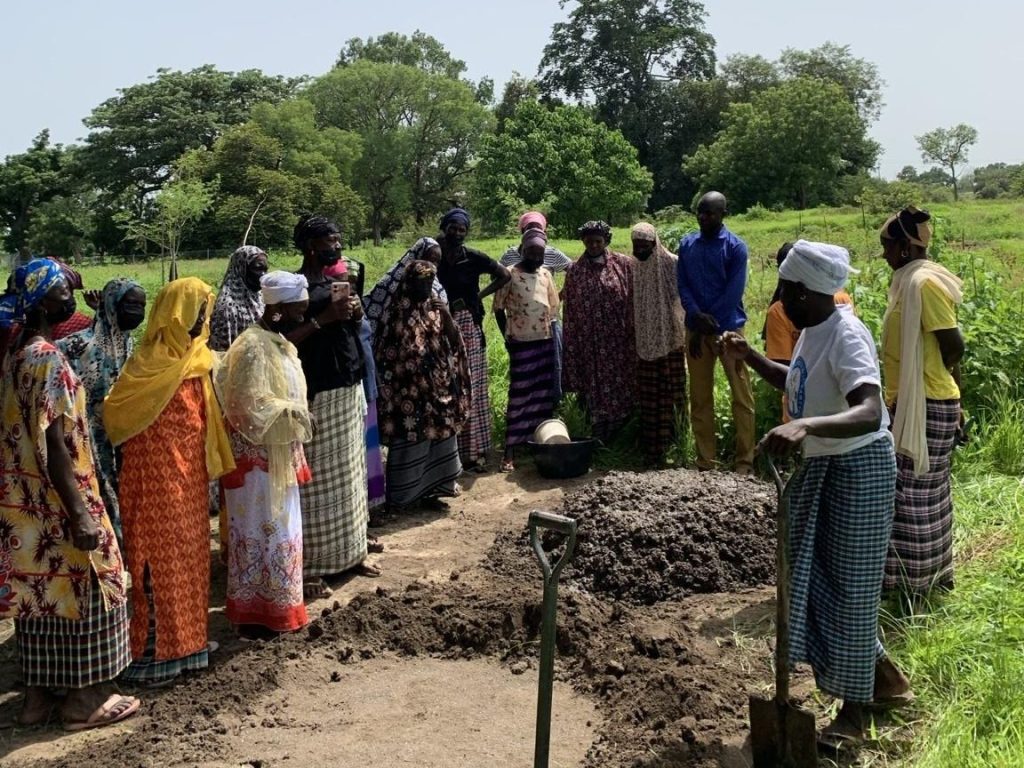
We are happy to see the farmers using the food processing station and look forward to seeing what they do with their new skills.
Follow us on Instagram @tesitoprojectgambia for updates!